Copenhagen is one of the great food cities of the world. Not only is it the capital of New Nordic cuisine and home to restaurants regularly voted among the best globally, it also offers outstanding Italian, French, and Latin American cooking – and one widely praised sushi restaurant.
Sushi Anaba has been recommended to me ever since I moved to Copenhagen four years ago. Many call it the best sushi in the Nordics – some even say outside Japan. In 2025, it finally received its first Michelin star.
My recent trip to Japan taught me a great deal about the depth and precision of Japanese cuisine, and evenings spent at top sushi counters completely redefined how I think about sushi. Ever since, I have been longing for those perfect bites of raw seafood. So it felt like the right moment to finally visit Sushi Anaba, with expectations set high: nothing less than an evening that would make me feel transported back to Tokyo.
The beginning of the night is not yet Tokyo-esque. Instead of the sixth floor of a skyscraper in buzzing Ginza, Sushi Anaba is housed in a small stone building – a former customs office – on the quiet waterfront of Copenhagen’s old harbour. Yet one element radiates Japanese humbleness: from the outside, nothing hints at a great restaurant experience inside. Only a candle burning in the wind signals that someone is home.
We are welcomed by a kind Danish waiter dressed in traditional Japanese attire, as are all members of the staff. He leads us into the dining room: a minimalist space dominated by a long wooden counter seating 15 guests. The atmosphere is one of calm anticipation. This already feels very Japanese – and I cannot wait for the meal to begin.

There is only one menu (1,900 DKK / approx. €255), which must be pre-purchased for all guests. With this price point, Sushi Anaba confidently places itself above Copenhagen’s other one-star restaurants – a clear statement, especially regarding the quality of its seafood. The only choice left to make is the beverage pairing. From a concise wine list focused on French crus, I choose a bottle of white Burgundy (as I do, admittedly, most days). While sake would traditionally be the better pairing – and the selection here is extensive – I have yet to truly warm to rice wine. Better safe than sorry.
Service begins as soon as we are seated. With two seatings per evening, a certain pace is necessary. I usually prefer long, unhurried meals, but at Sushi Anaba the rhythm feels natural and never rushed.
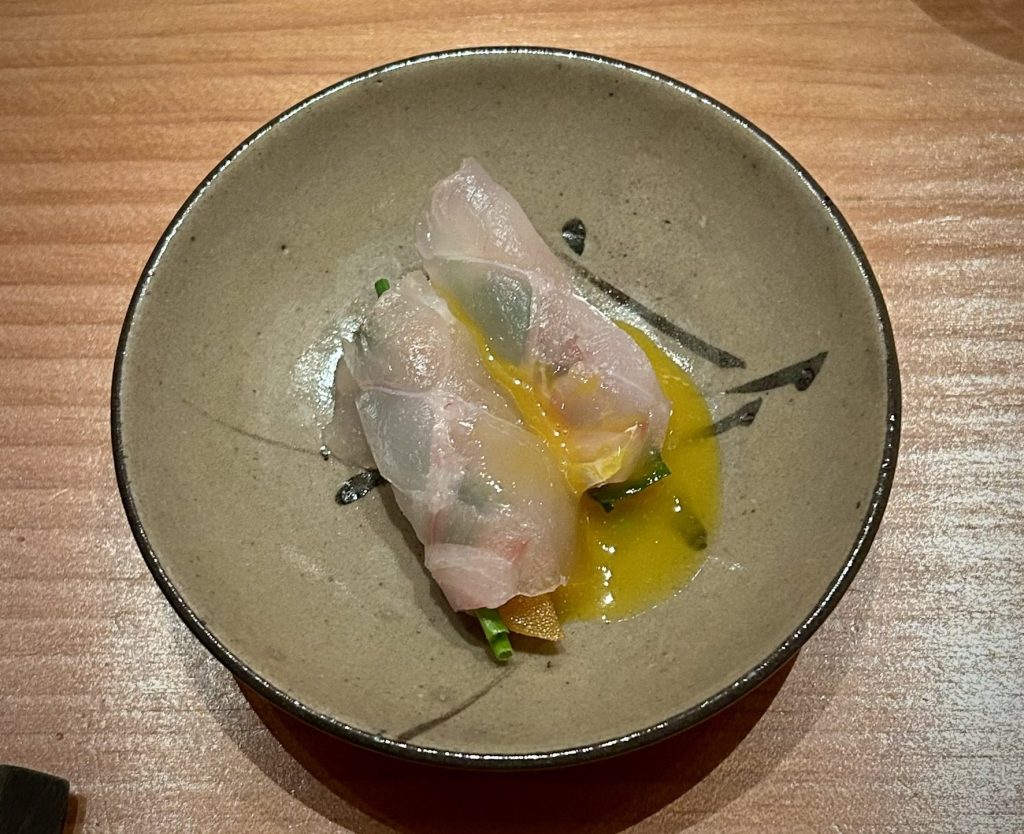
The menu starts – as is usual for an Edomae style omakase – with a series of otsumami (small starters). First comes thinly sliced raw Norwegian Redfish, wrapped around some fresh seaweed and served with egg yolk. Mild, clean, and subtle – a gentle opening. (6.5/10)
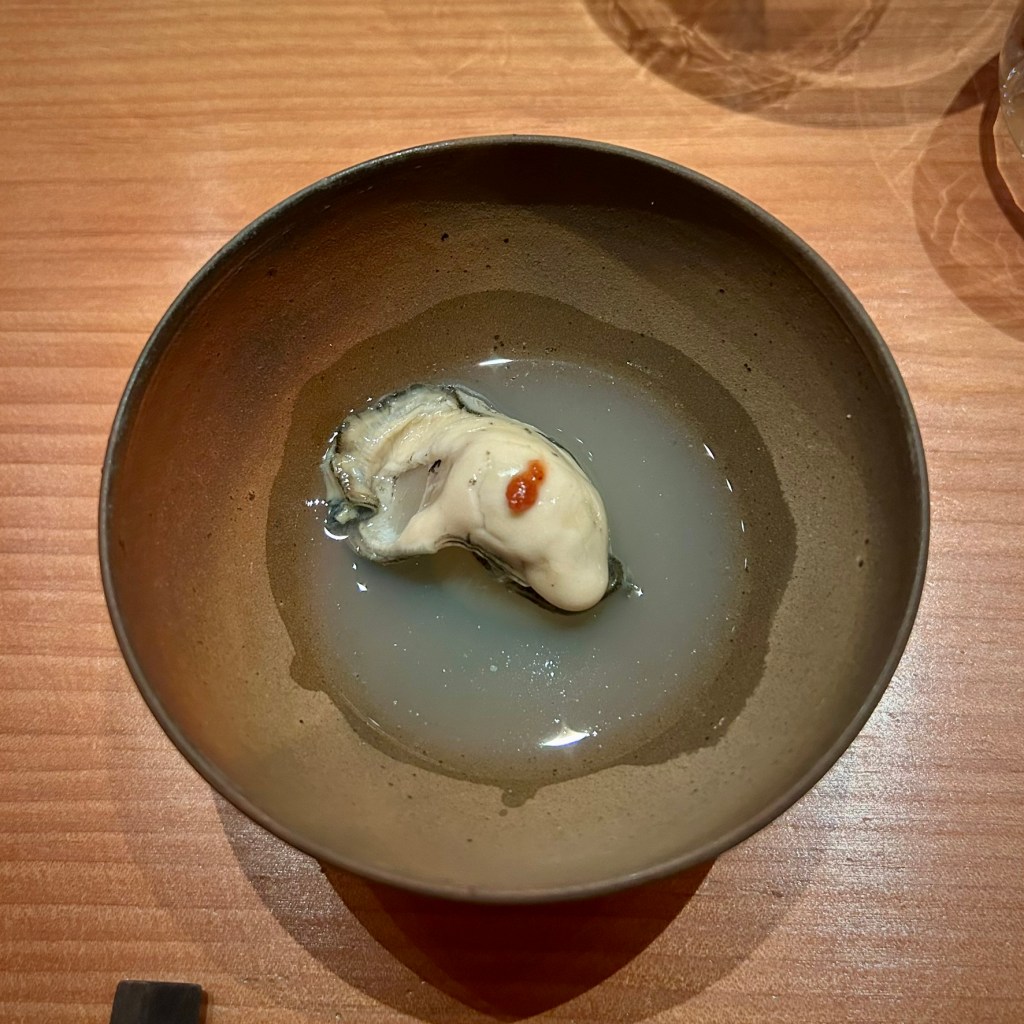
Next comes a poached oyster, lying on a caramelised pearl onion, surrounded by an intense dashi. A harmonious dish balancing sweetness, umami, and deep sea flavours. (7/10)

While a sushi master grates fresh wasabi behind the counter, the service team presents the next course: poached lobster with eggplant and miso. The dish is asthetically not very pleasing, and the first bite into the lobster presents a slight disappointment: it is chewier and less flavourful than expected, overwhelmed by an overly dominant miso, which the eggplant is soaked in, and which tastes more like peanut butter than red miso. Not a well balanced dish in my view. (5/10)
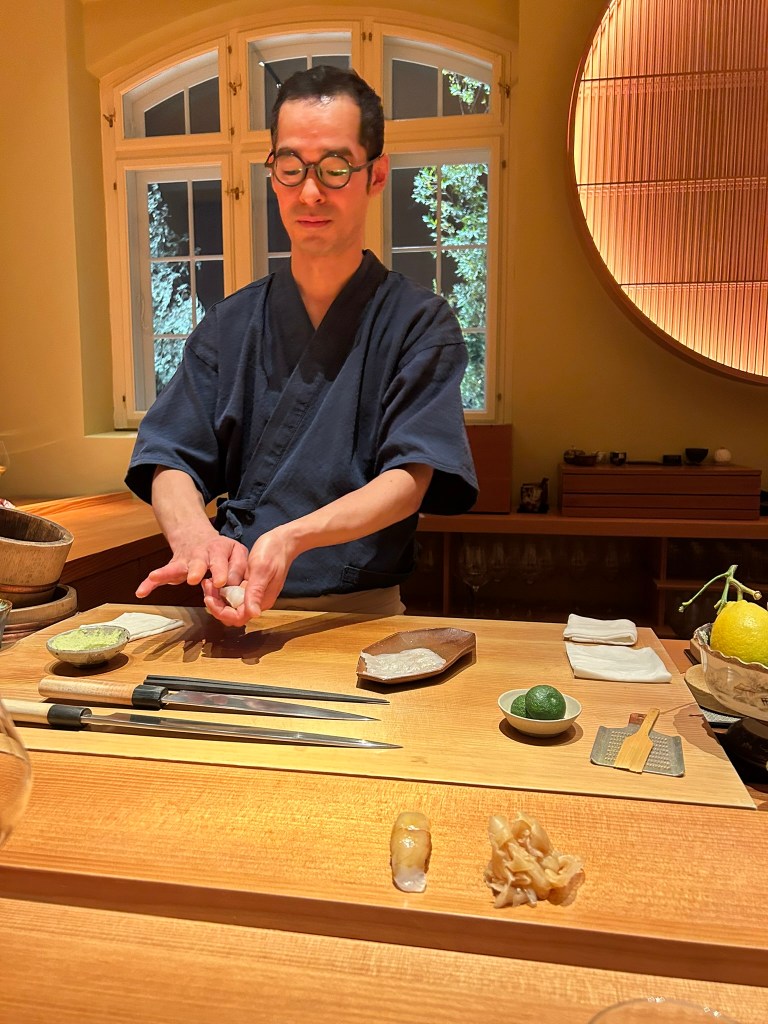
There is little time to dwell on this, however, as the main event begins: the sushi. Two sushi masters take their stations behind the counter, each serving half of the guests. One of them is Danish owner and head chef Mads Battefeld; we are being served by a Japanese colleague of his, who was trained in Japan and moved to Copenhagen seven years ago, specifically to work for Battefeld.
Watching a sushi master up close never fails to fascinate me. In fluid, precise movements refined over decades, the rice is shaped, a touch of wasabi added, and a thin slice of fish placed on top. A brush of soy sauce, and the nigiri is set directly on the counter in front of me. Every second counts now: sushi is meant to be eaten as fresh as possible and each piece arrives moments after it is formed. I barely dare to take a quick picture of the piece, then I put it in my mouth: by hand, and in one bite – the only proper way.

The first nigiri, whiting, is outstanding. The fish is tender and pristine, but what I am really looking out for is the rice: how is it seasoned (in other words: which kind of vinegar is the sushi master using), how firm is it, how warm? The rice is the real signature of a sushi master and most spend years perfecting their recipe. At Anaba, the rice has a brownish colour, and I am told this is due to a sake-based vinegar. The rice’s taste is very subtle and it has a perfect sweet-acidic balance. Interestingly, it is on the warmer side, slightly above body temperature, which adds an exciting temperature play in combination with the distinctly cold fish. Whiting, rice, wasabi, and soy sauce blend together to a wonderfully proportioned and balanced bite. I close my eyes: I am instantly back in Japan. This is exactly what I came for. (I will not give separate ratings for each nigiri, but will rate the sushi sequence as a whole.)

More please! Turbot arrives next, and is again a wonderfully tender and mild bite. With a stronger taste of soy sauce than the first one, but still very well balanced.

Squid follows. A fish that I have never had before as a (proper) sushi. Instead of wasabi and soy sauce, this nigiri is finished with a few drops of lime, which makes it a very refreshing bite. The squid’s surface has been finely scored which seems to help its texture: it is the most tender piece of squid I have ever tasted.
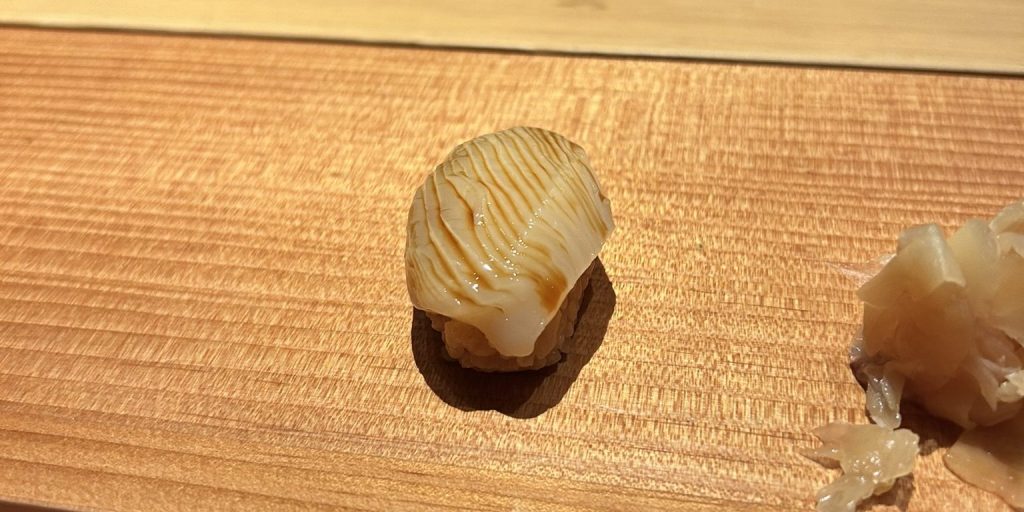
The scallop nigiri again shows brilliant tenderness. The proportions are a bit different than with the previous pieces, the scallop slice is thicker. However, this works perfectly. By this time I am not surprised: the sushi masters clearly seem to know what they are doing here at Anaba.

The next piece is a gunkan, a hand-formed ball of rice that is surrounded by a piece of nori seaweed, in this case topped with rasor clams. Another perfectly balanced bite with deeper umami flavours thanks to the seaweed.

Three shrimp form the next nigiri. The texture of the shellfish is extremely creamy and soft. This is all on a very high level!

The shrimp heads are then also served. Deep fried, they make for a fun, crispy snack.
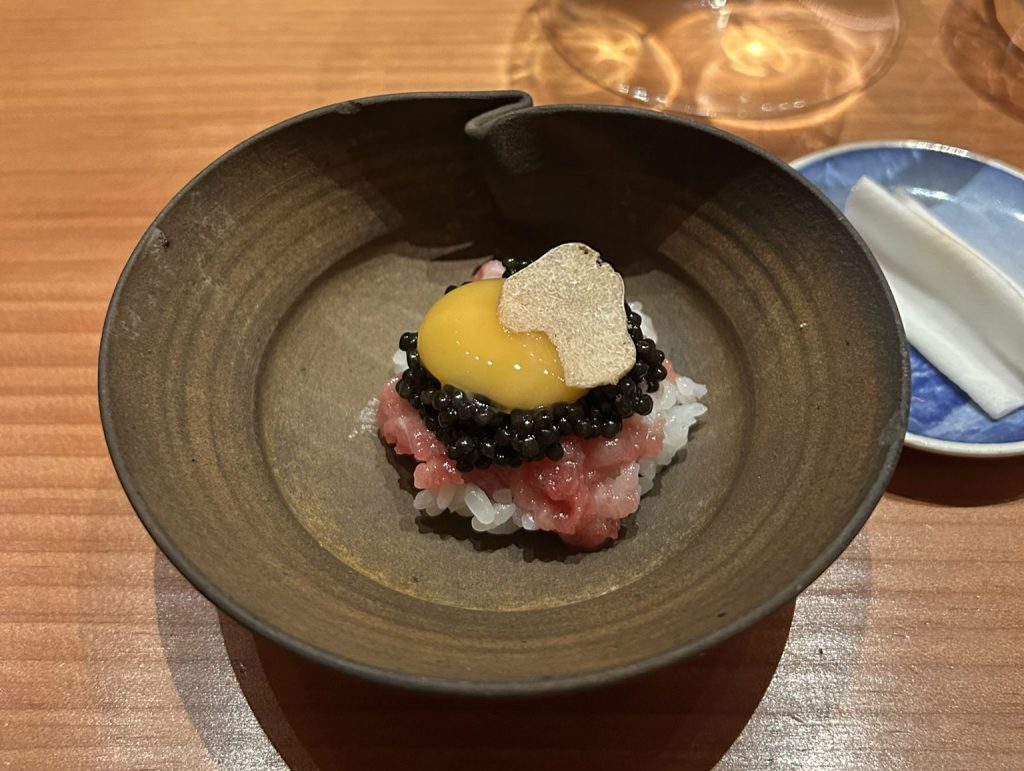
In the meantime the other staff has been preparing some plates in the background. I am surprised: Is the nigiri flight already over? I try not to let my disappointment show, as I was definitely craving some more beautiful sushi pieces. Still, what is placed in front of me now is hard to refuse: rice, tuna tartare, oscetra caviar, quail egg, and white Alba truffle. A dish that I am pretty sure you would not find at a Tokyo sushi restaurant. With its tradidionally luxurious ingredients it seems more tuned to a sophisticated European palate – or maybe more specifically to the local Michalin reviewers. It is of course absolutely delicious, blending the saltiness of the caviar with creamy fatty tuna and the egg yolk. The truffle adds an extra flavour element to it. It just feels slightly out of sequence. (7.5/10)
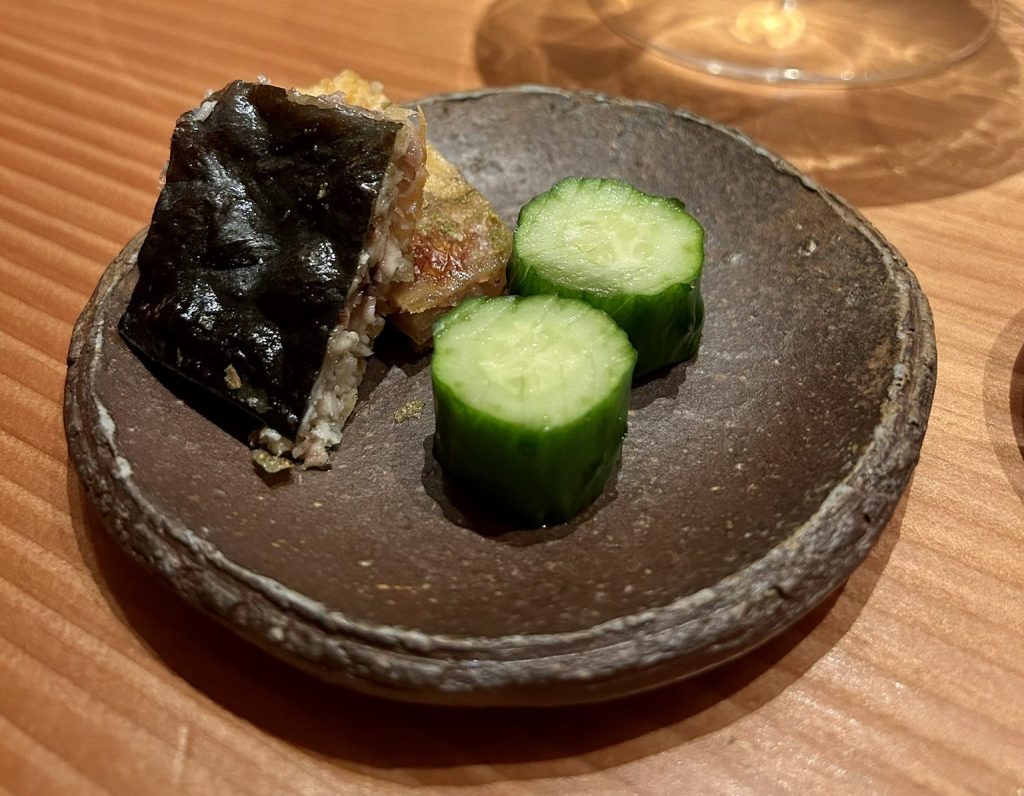
The next plate is purely Japan-inspired again: fried eel is plated next to pickled cucumbers. An intensely fishy dish, but very good. (7/10)
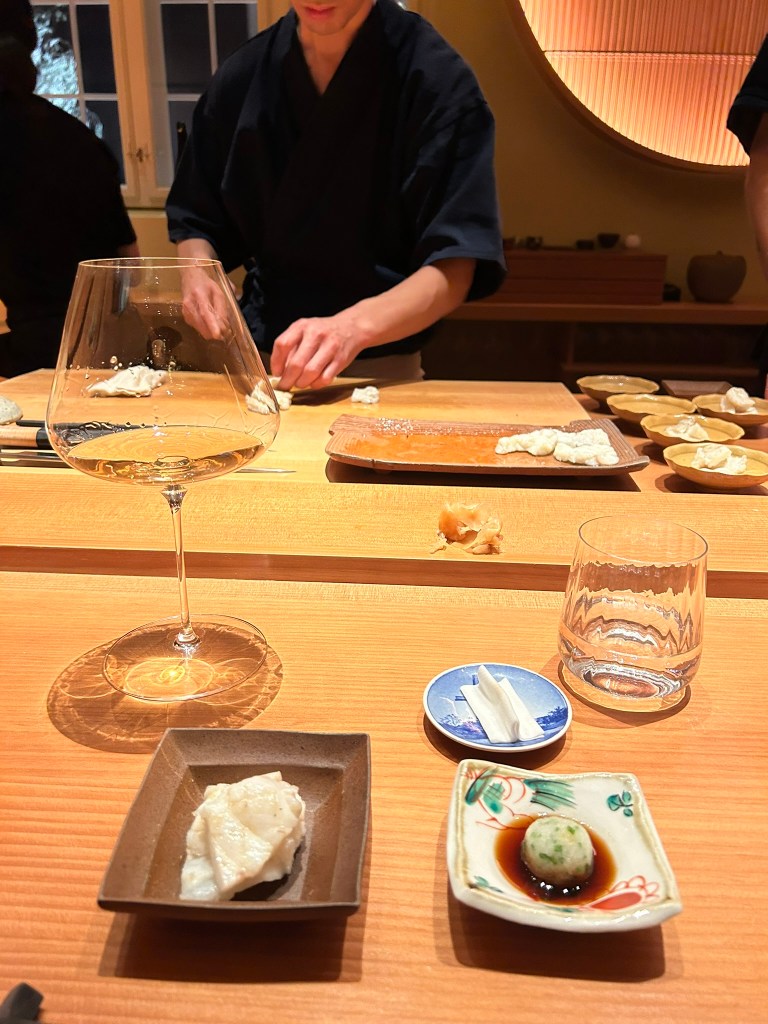
Monkfish with ponzu sauce and daikon is next, and truly excellent! Perfectly cooked fish lifted by a salty-sweet acidity and the sharpness of the radish. This is pretty amazing. (8.5/10)
In the background Mads Battefeld has – to my immense pleasure – reached for his fish knife again and started cutting what clearly looks like the trio of tuna often served in sushi restaurants: akami, chutoro, and otoro.
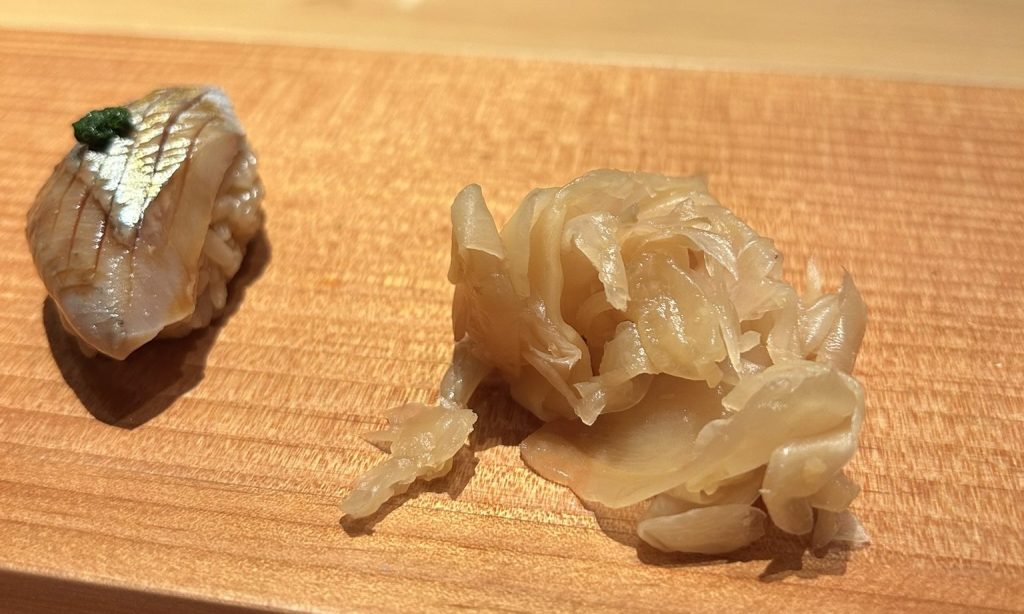
Before that, the nigiri flight picks up again with a surprise: smoked herring. Usually not my favourite when served on local smørrebrød, it is prepared here in stupendous quality and much milder and more elegant.

The next nigiri, Norwegian king crab, is then an absolute highlight: So tasty, so smooth. A dream!

We are now shown the tuna selection for the night. Impressive!
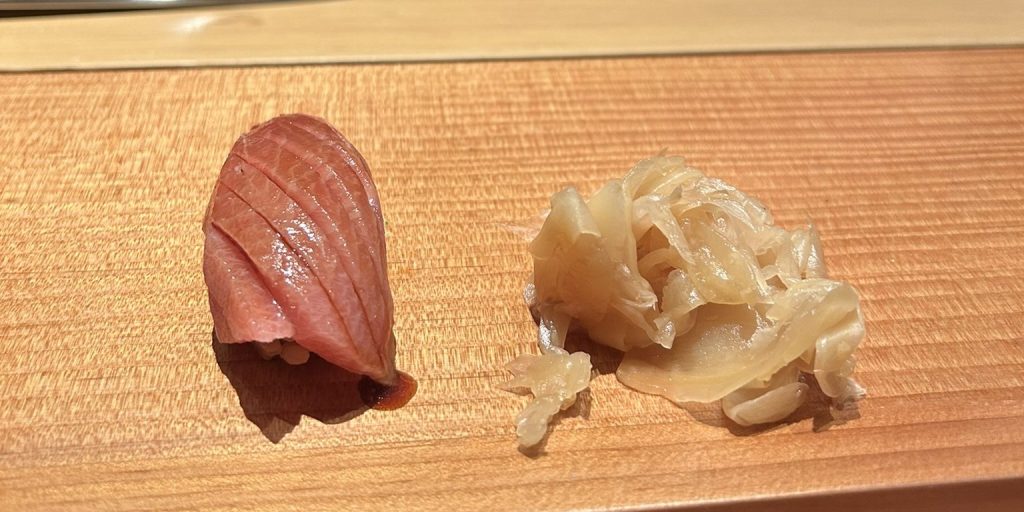
The tuna serving starts with chutoro, the middle section of the belly. It is as delicious as I was hoping for: creamy and buttery, melting instantly in the mouth. Nearly on par with the best I’ve had in Tokyo.

Otoro, the fattest and richest part of the lower tuna belly, is also its most pricy and often the highlight of a nigiri sequence. However, today I find the bite a bit chewier than the chutoro and not as perfectly harmoneous texture-wise.

The final nigiri to arrive is the lean part of the tuna, akami. In my experience usually served first of the tuna trio, here it makes for a light, delicious, and delightful last bite. A great ending to an impressive sushi sequence! What Battefeld and team are serving here, mostly sourced from local and regional seafood, is nothing less of astonishing. The nigiri are all of outstanding quality, and if our time at the counter was not very limited, I would easily order all of them again. (Nigiri flight overall: 8.5/10).

The savory part of the meal ends with a few sips of an intense, umami-rich miso soup. Delicious! (7/10)
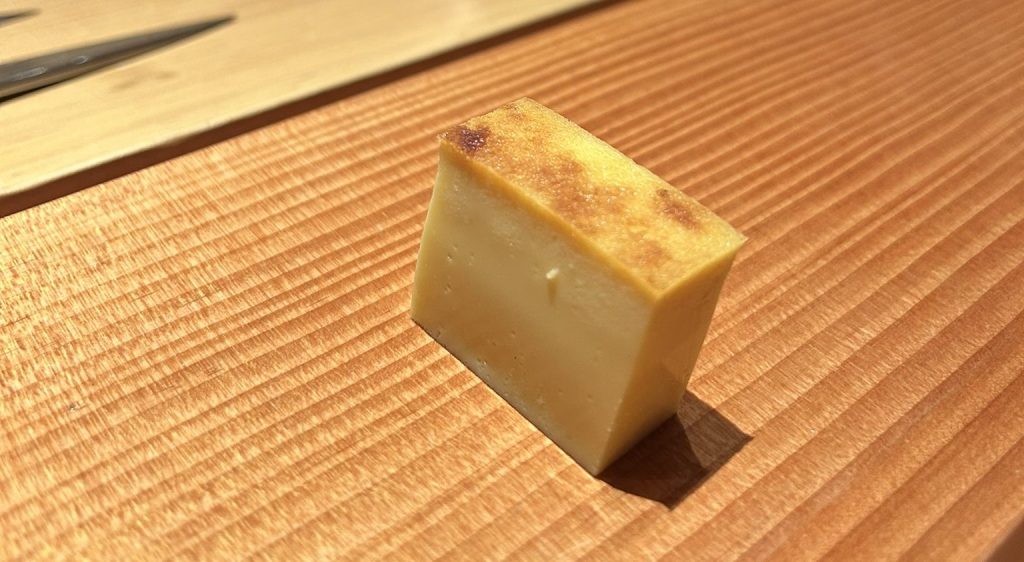
As a sweet bite, the traditional tamago (egg omlet) is served. It is very firm in texture and its flavours of langoustine and honey do not really come together. A steep drop after the brilliance of the sushi. (6/10)

The final dessert is a monaka, thin rice waffles, filled in this case with pumpkin puree and pickled chanterelles. It’s a fine bite; but another reminder that traditional Japanese desserts rarely resonate with me. I would not have minded a pivot toward local pastries for the sweet part of the menu. (6.5/10)
As soon as the last bite is taken, we are politely asked to move to an adjacent room so the counter can be prepared for the next seating. The “lounge” is stylish but a bit small, and after we finished our last glass of wine we soon step back out into the Danish winter night.
On the walk home, there is time to relive the perfect sushi bites we just experienced – and to start thinking about the next trip to Japan. Until then, it’s comforting to know that a gateway to Tokyo exists right here in Copenhagen.
Restaurant
📍 Sushi Anaba, Copenhagen (DK)
🌐 Website | Instagram
🧑🏼🍳 Mads
🗓️ 18 December 2025
⭐ Michelin Guide (Nordics 2025): ⭐
Rating
Food: 8/10
Service & Athmosphere: 8/10
Overall: 8/10
 A Gourmet Journey